




Some designs do more than reflect the aesthetic understanding of the era in which they were created; they permanently transform the way people relate to space. Togo, one of the most iconic pieces of French design, stands among the strongest examples of this transformation.
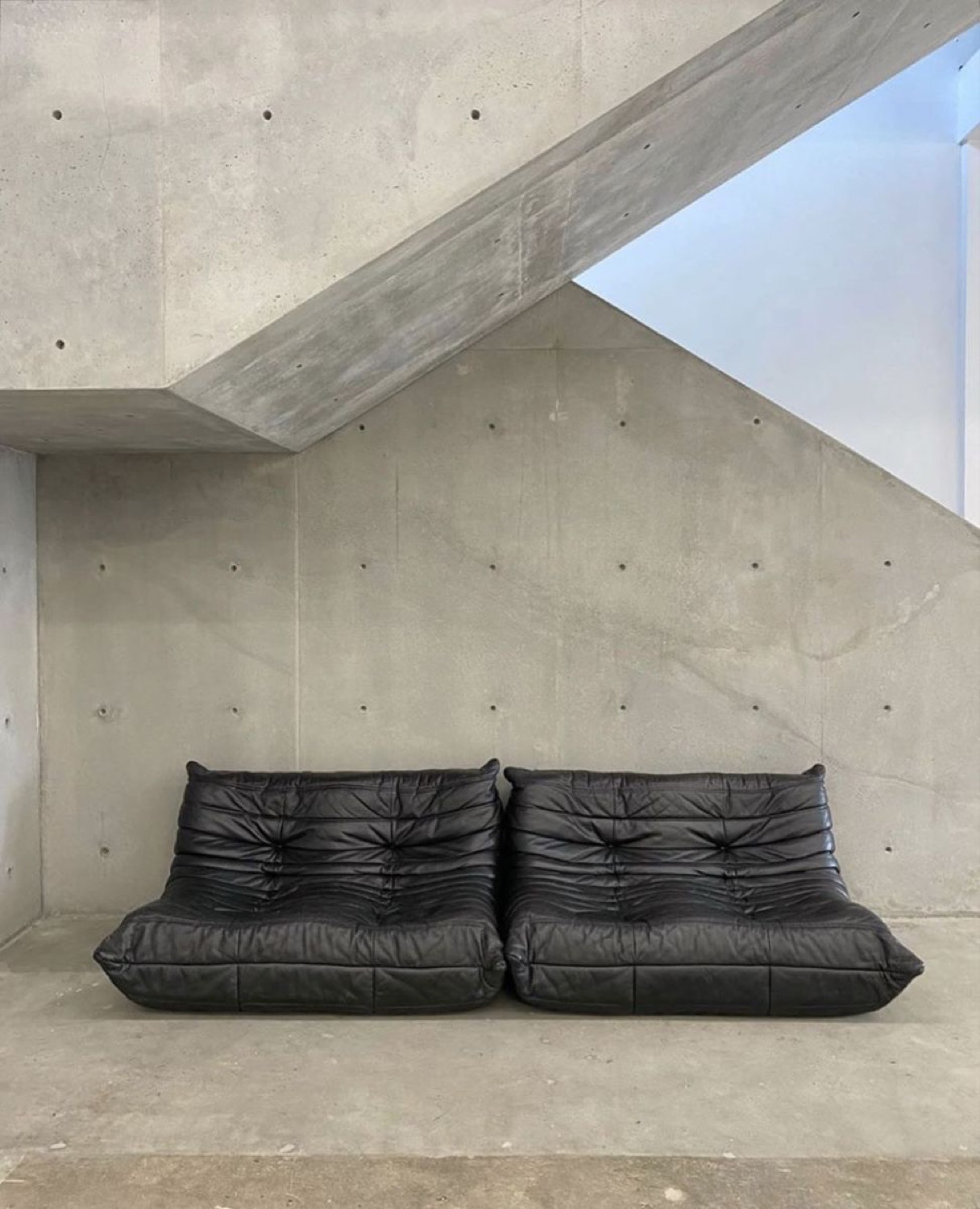
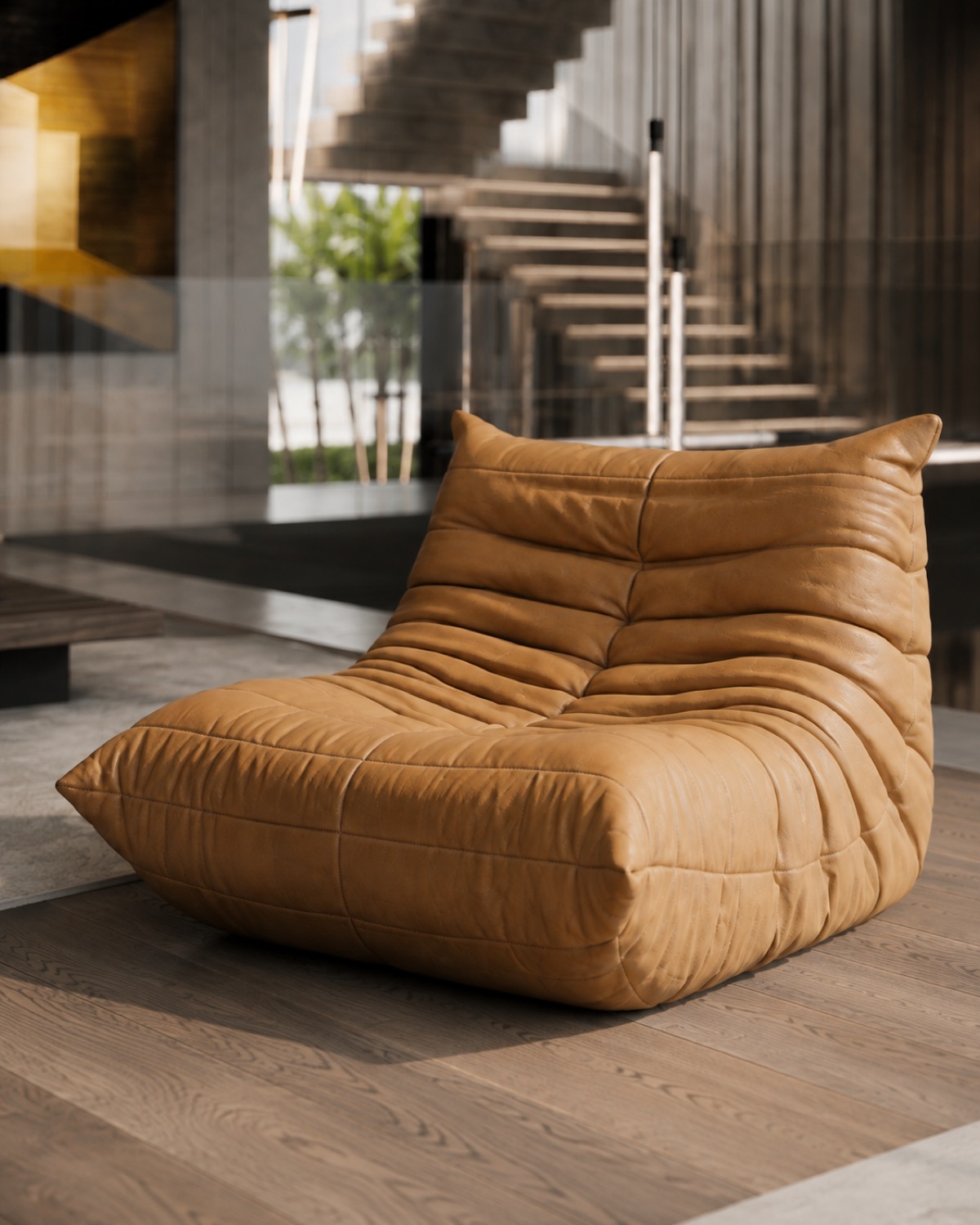
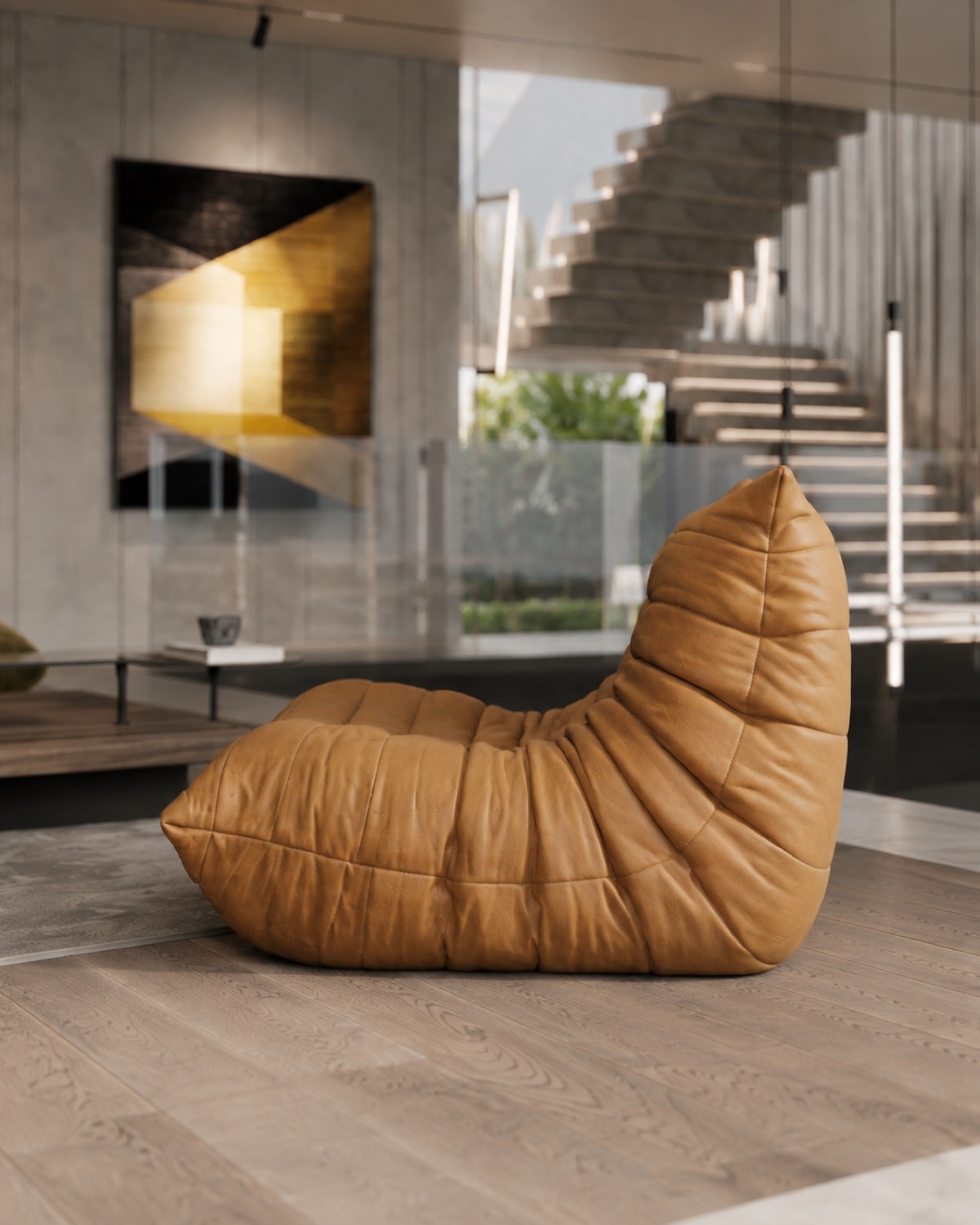
Designed by Michel Ducaroy for Ligne Roset in 1973, Togo introduced an approach that was entirely different from the traditional concept of seating. Rather than relying on a wooden or metal frame, visible legs, and an upright seating position, it was developed as a low-level design composed of layers of foam in different densities, shaped to embrace the body.
Its quilted surface and distinctive folds defined not only the technical construction of the chair but also its powerful visual identity.
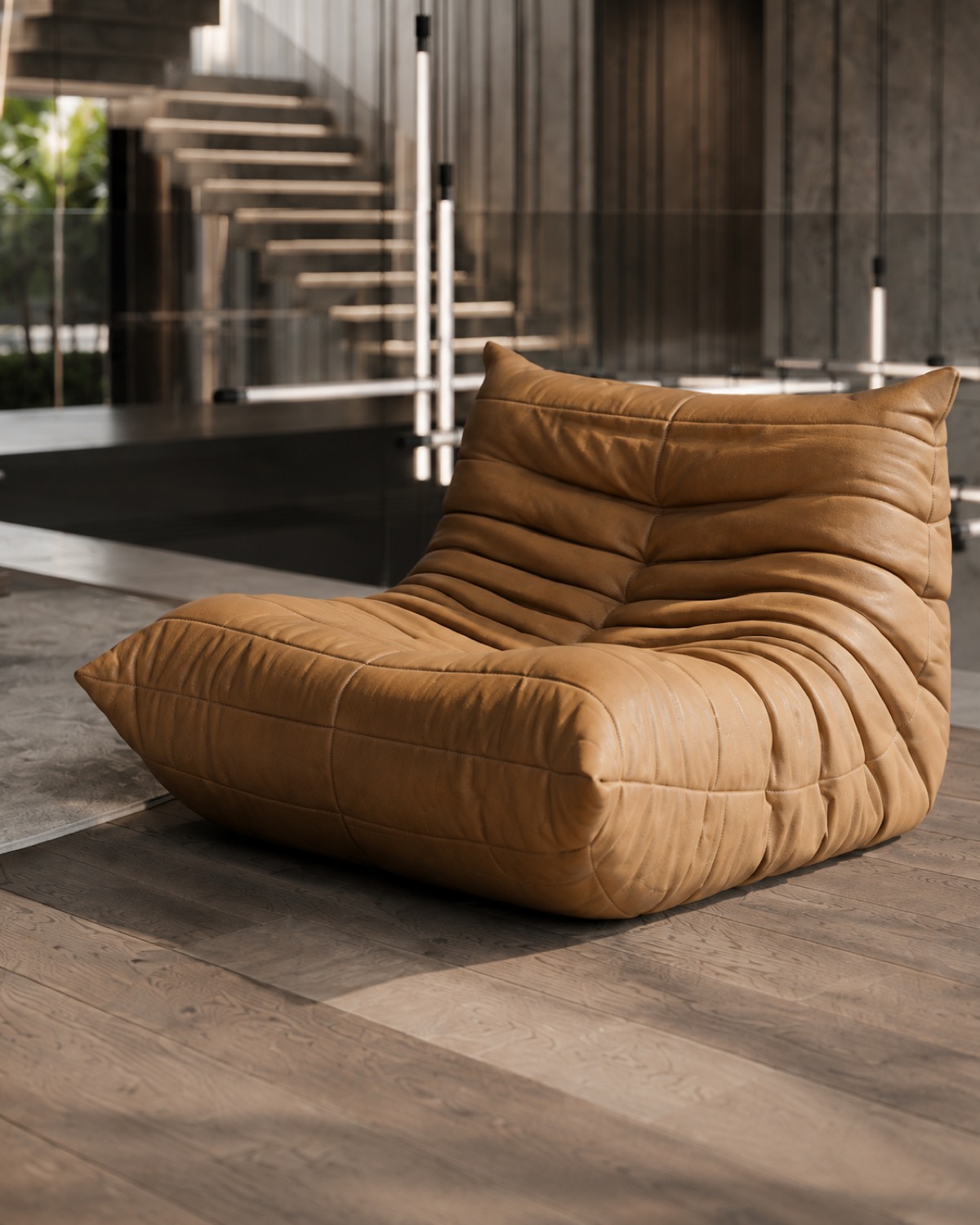
1973
Michel Ducaroy · Ligne Roset
The Free-Spirited Lifestyle of the 1970s
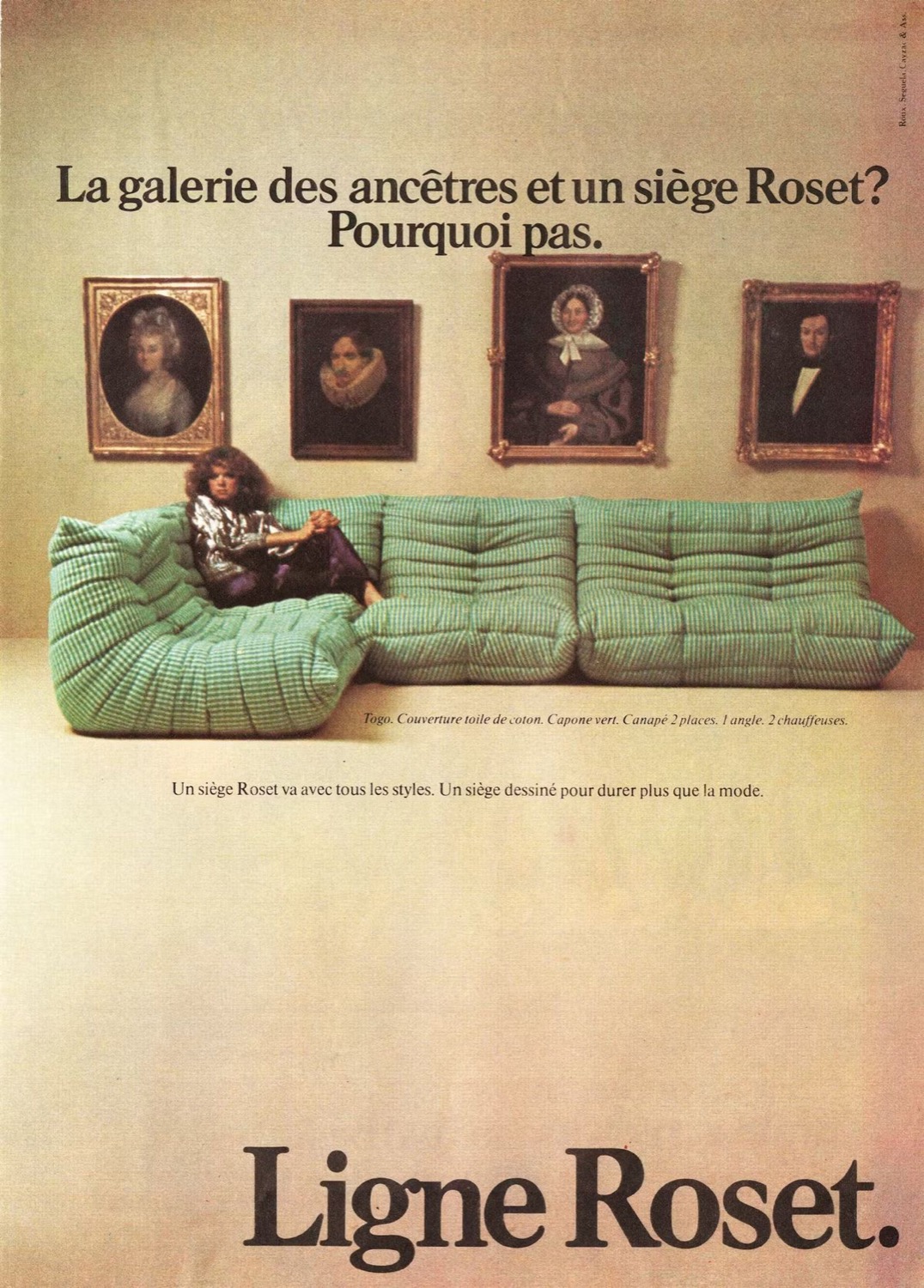
The emergence of Togo in 1973 was no coincidence. During the 1970s, the design world was moving towards freer, more flexible spaces centred around everyday life. Traditional and formal living-room arrangements gradually gave way to environments where people could relax, gather in different ways, and use space more freely.
With its low profile and relaxed seating structure, Togo became one of the symbols of this transformation. In place of formal and upright seating habits, it proposed comfort, relaxation, and a more intimate way of living.
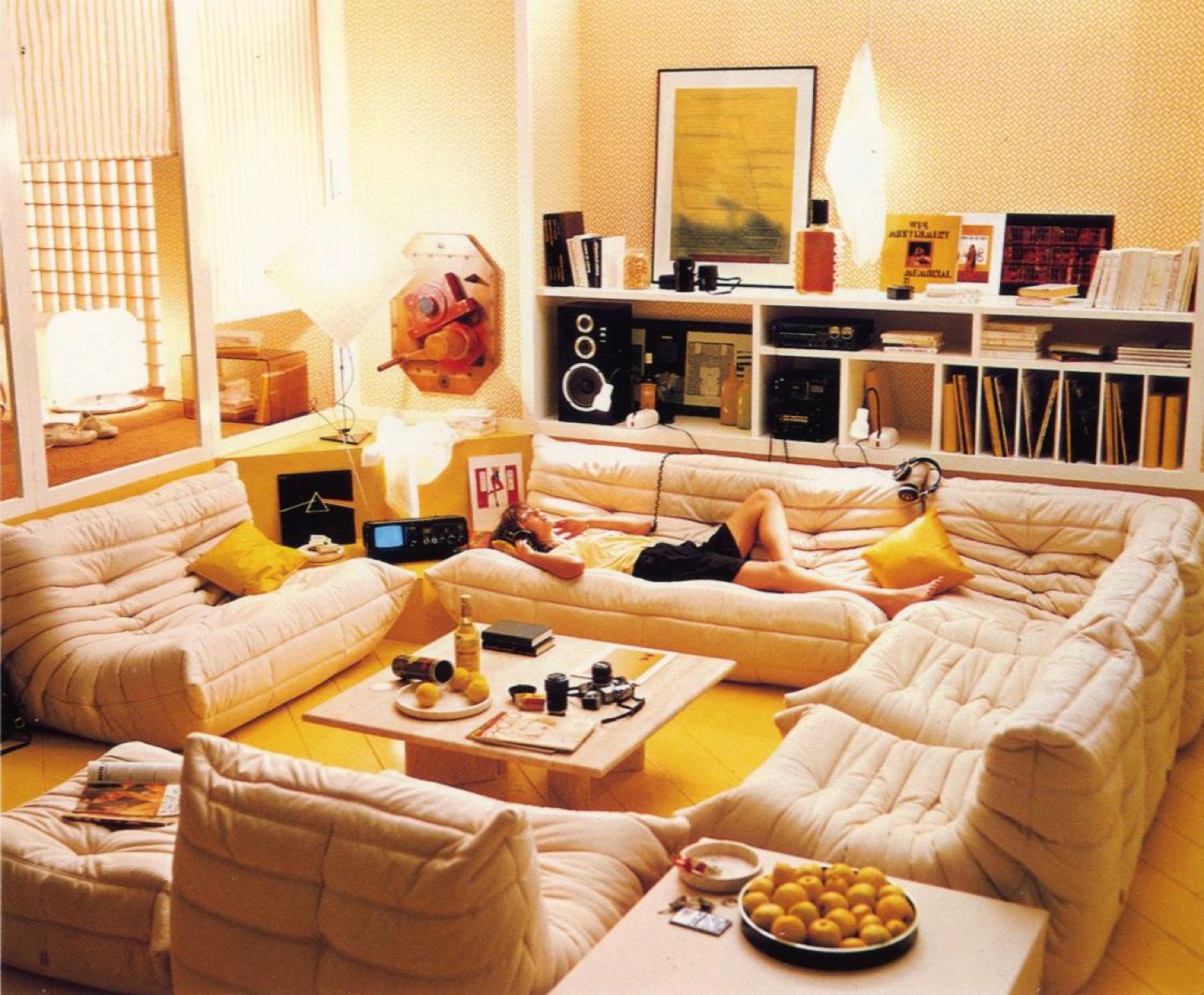
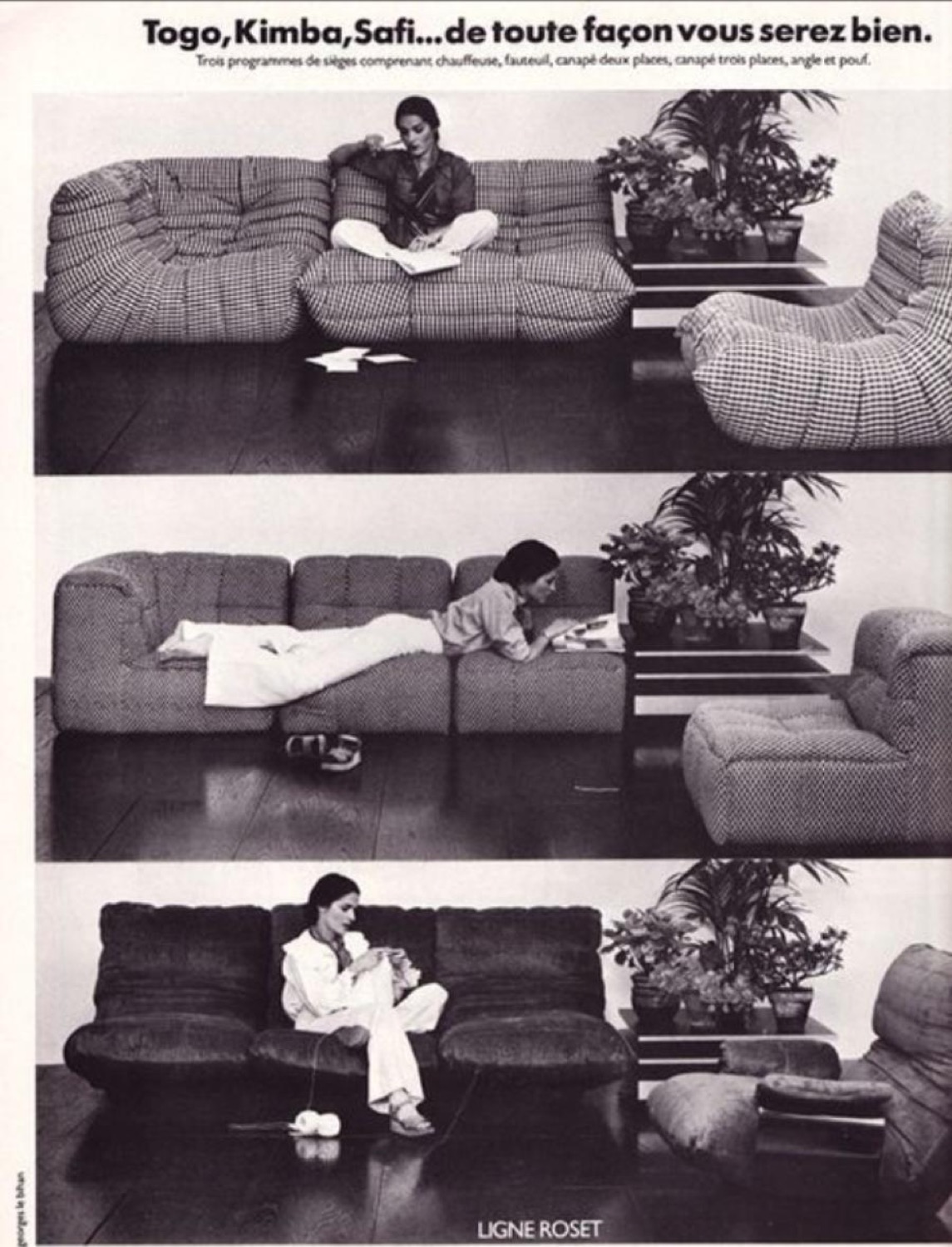
The success of the design was not based solely on its striking appearance. By combining foams of different densities, Togo achieved an ergonomic form that adapts naturally to the body.
Expanded through a collection of individual chairs, two- and three-seat sofas, corner modules, and footstools, it evolved from a standalone piece of furniture into a flexible and modular seating system.
The Impact of Furniture on Space
Togo’s true innovation was not limited to changing the way we sit; it also transformed the way seating areas are designed. Low-level furniture interrupts the line of sight less, helping spaces feel more open and expansive. Against sharp architectural surfaces, it creates a soft, organic, and sculptural balance.
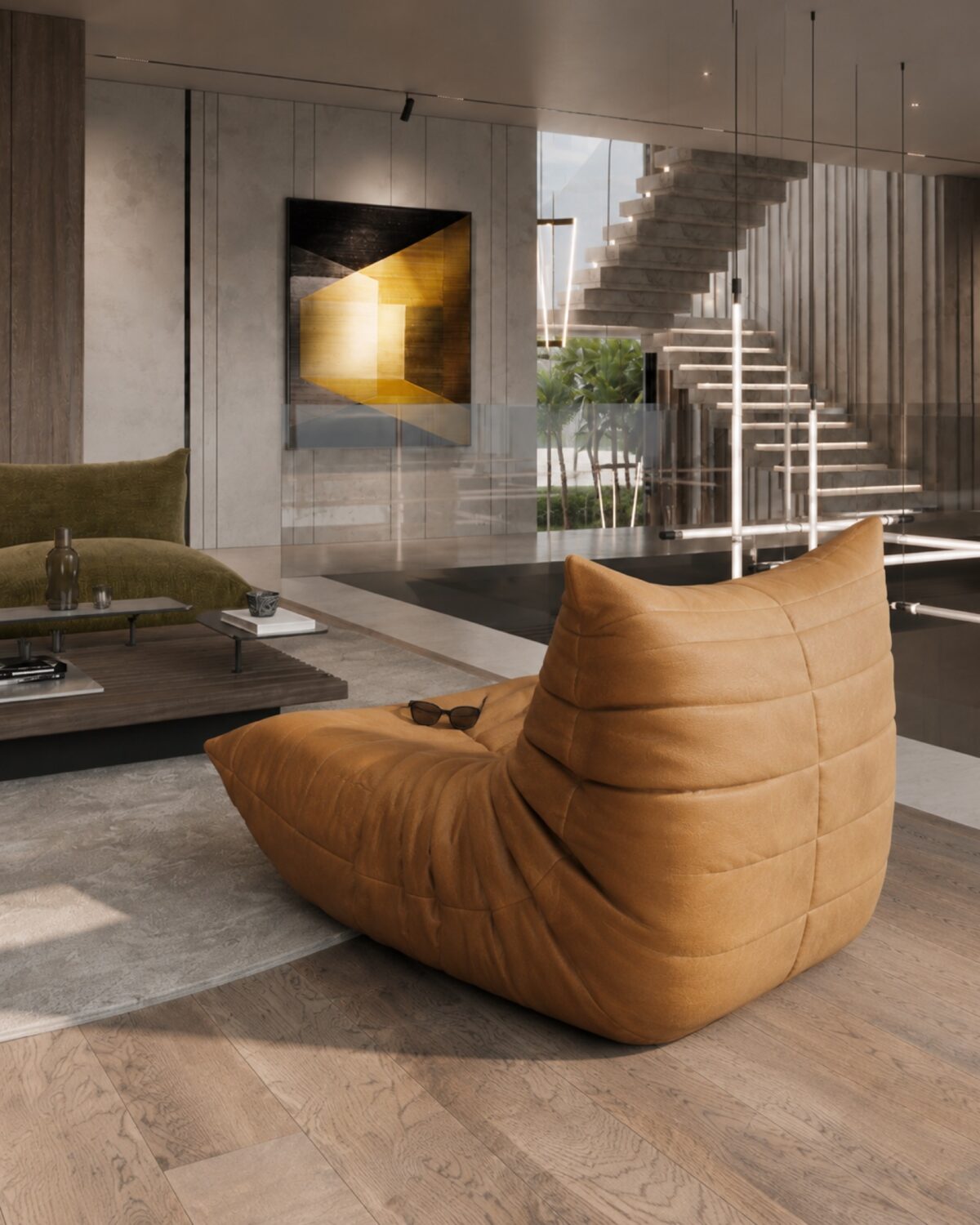
It also removes the need to position seating exclusively along walls, allowing furniture groups to be arranged more freely at the centre of a space.
Today, this approach is not limited to the direct use of Togo itself. Low seating, generously upholstered forms, curved surfaces, and modular pieces continue to appear in contemporary interiors through a wide range of design interpretations.
A Contemporary Interpretation at CT Villa
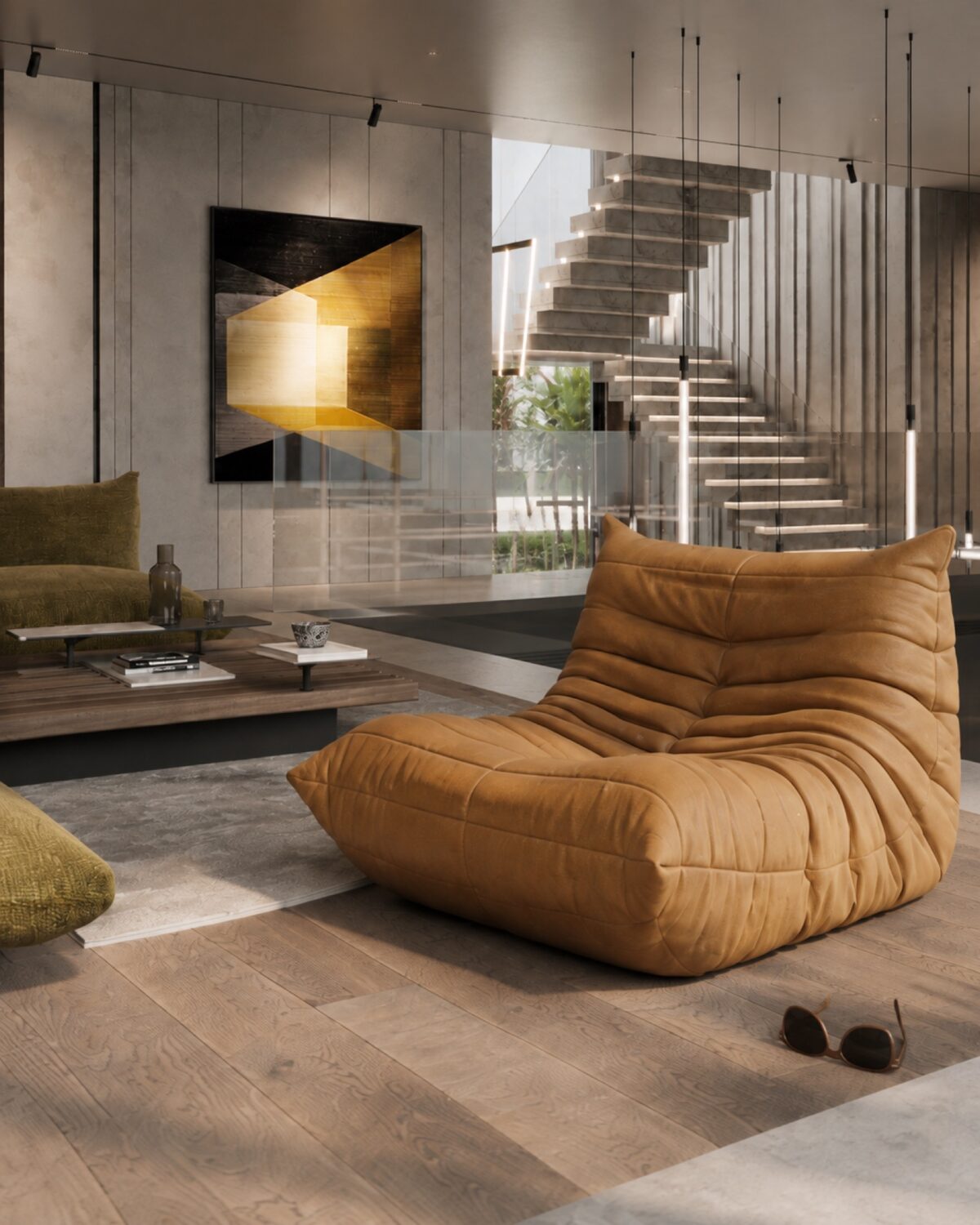
The low-level, soft, and voluminous furniture used at CT Villa can also be considered a contemporary reflection of this design philosophy. Although the seating elements used in the space are not direct Togo pieces, their low placement, enveloping forms, and ability to soften the strong architectural lines recall the design approach initiated by Togo.
The connection goes beyond a purely formal resemblance. The furniture is not treated as a collection of independent objects placed within the living room, but as part of an architectural composition that works together with light, materials, circulation, and spatial proportions.
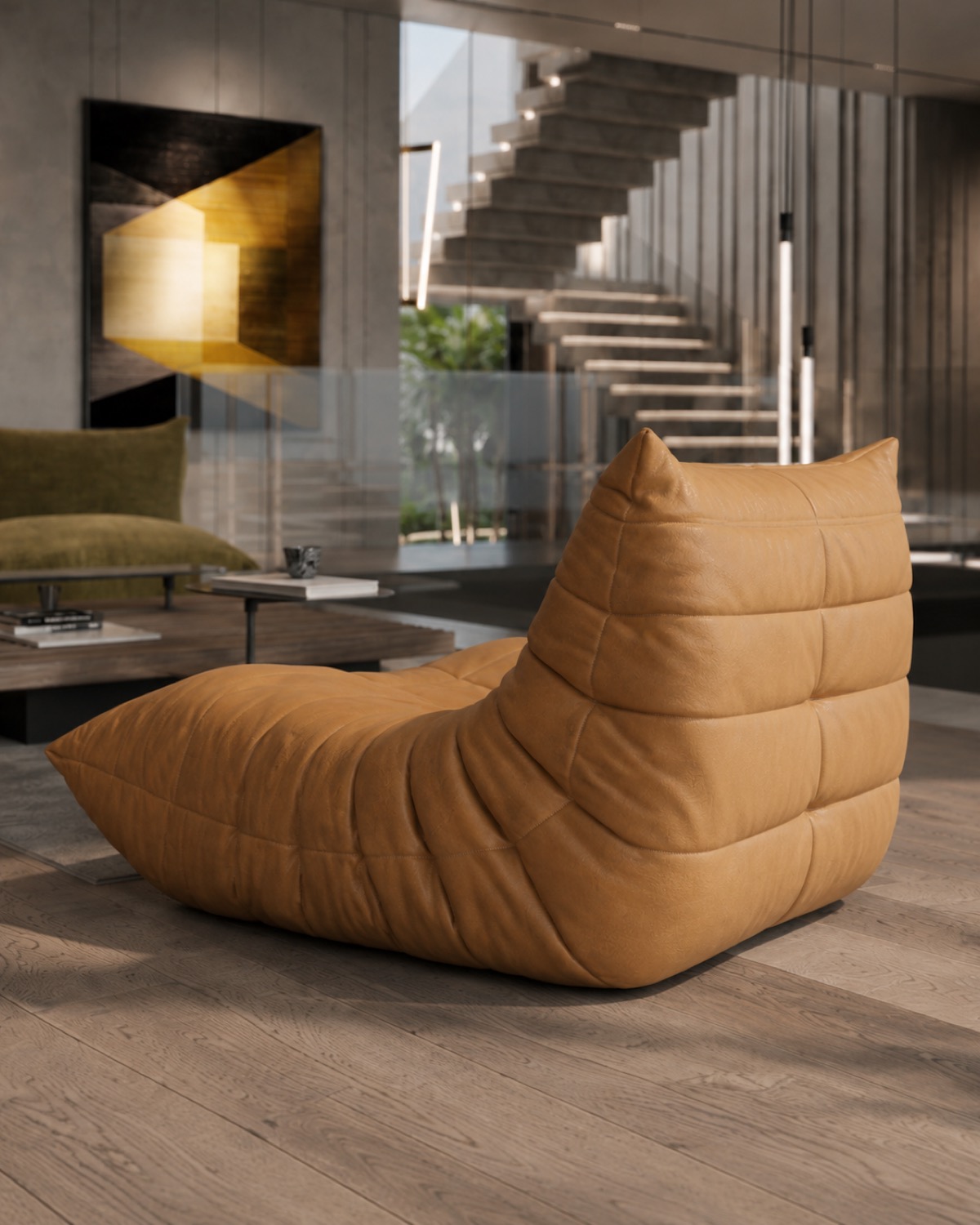
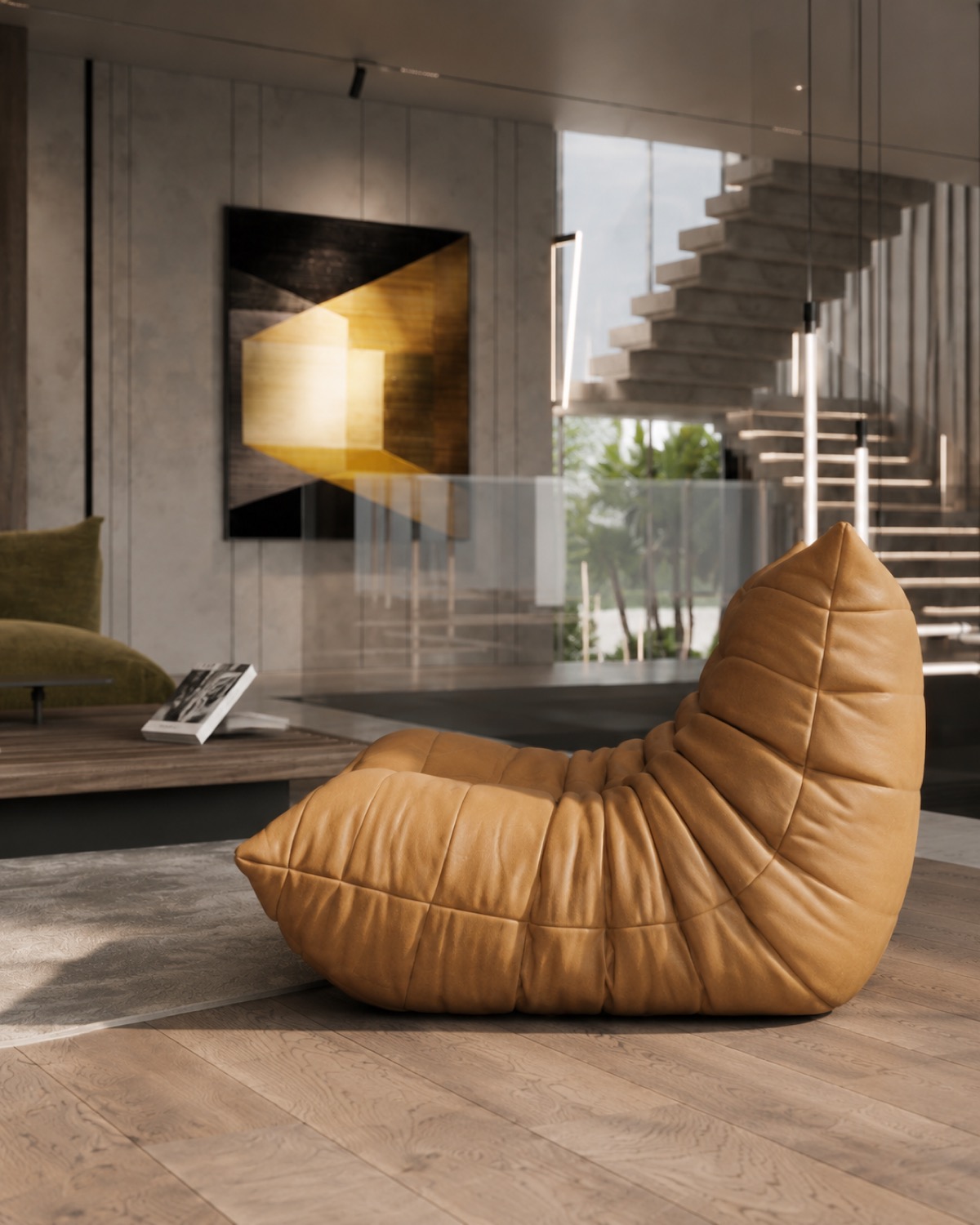
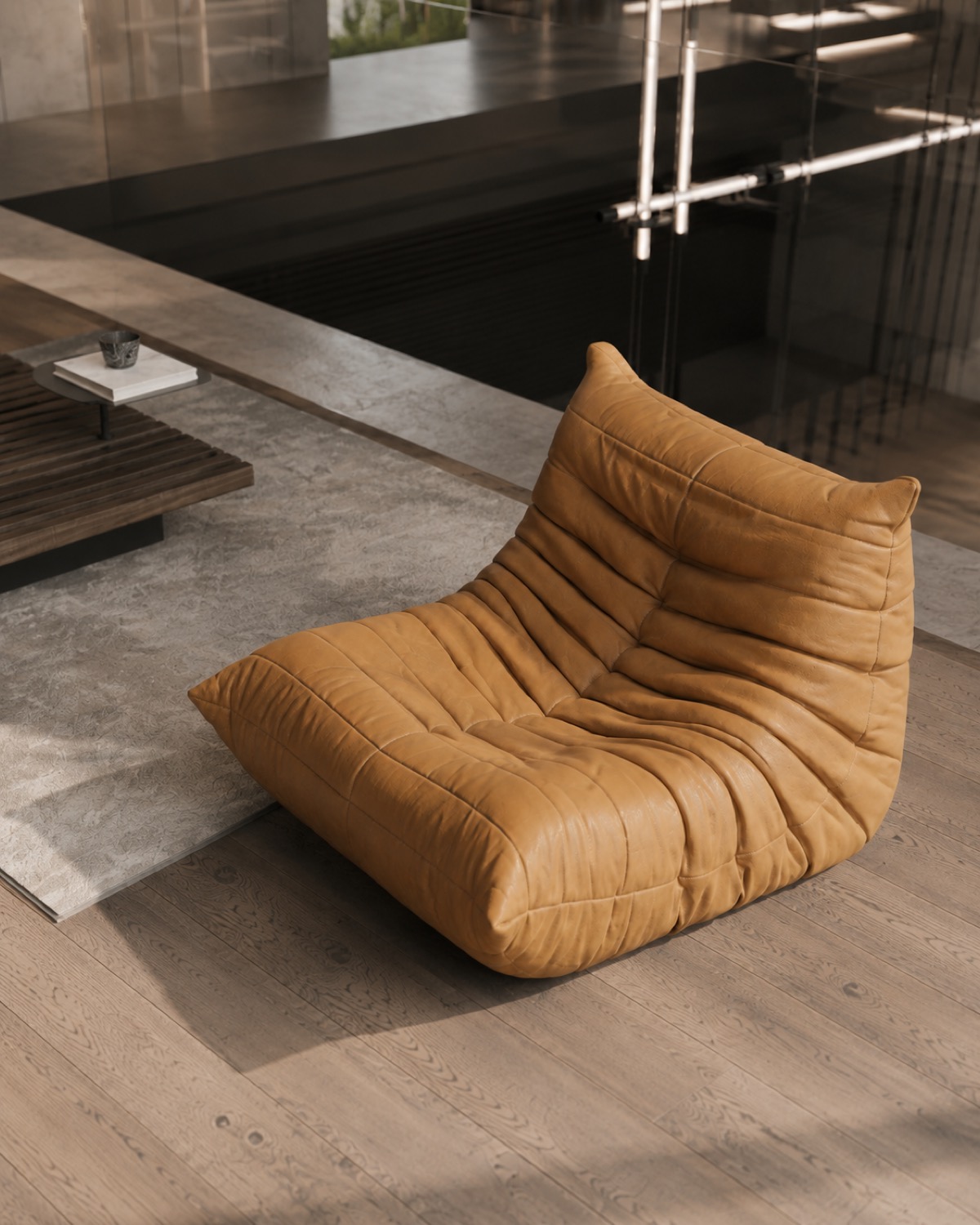
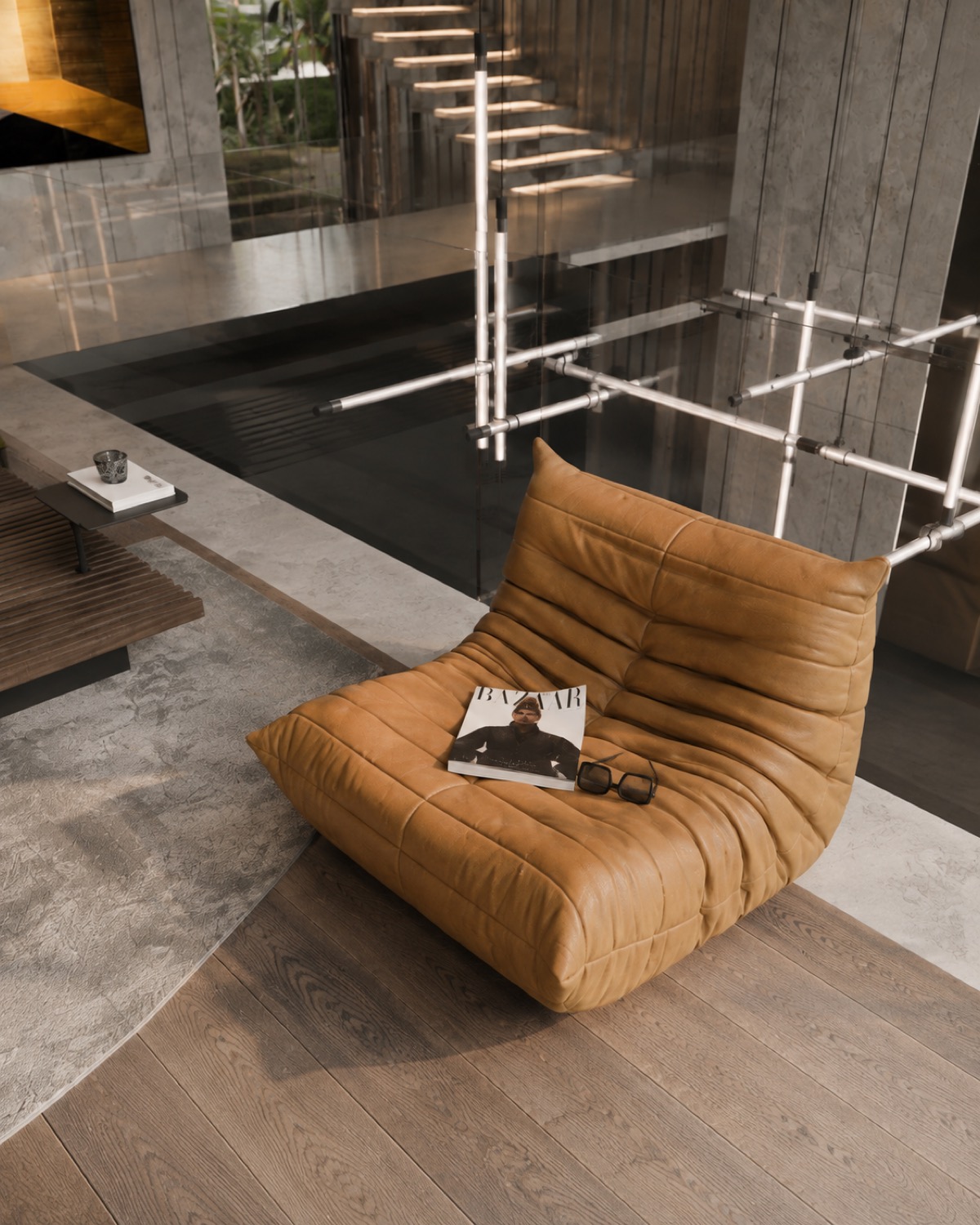
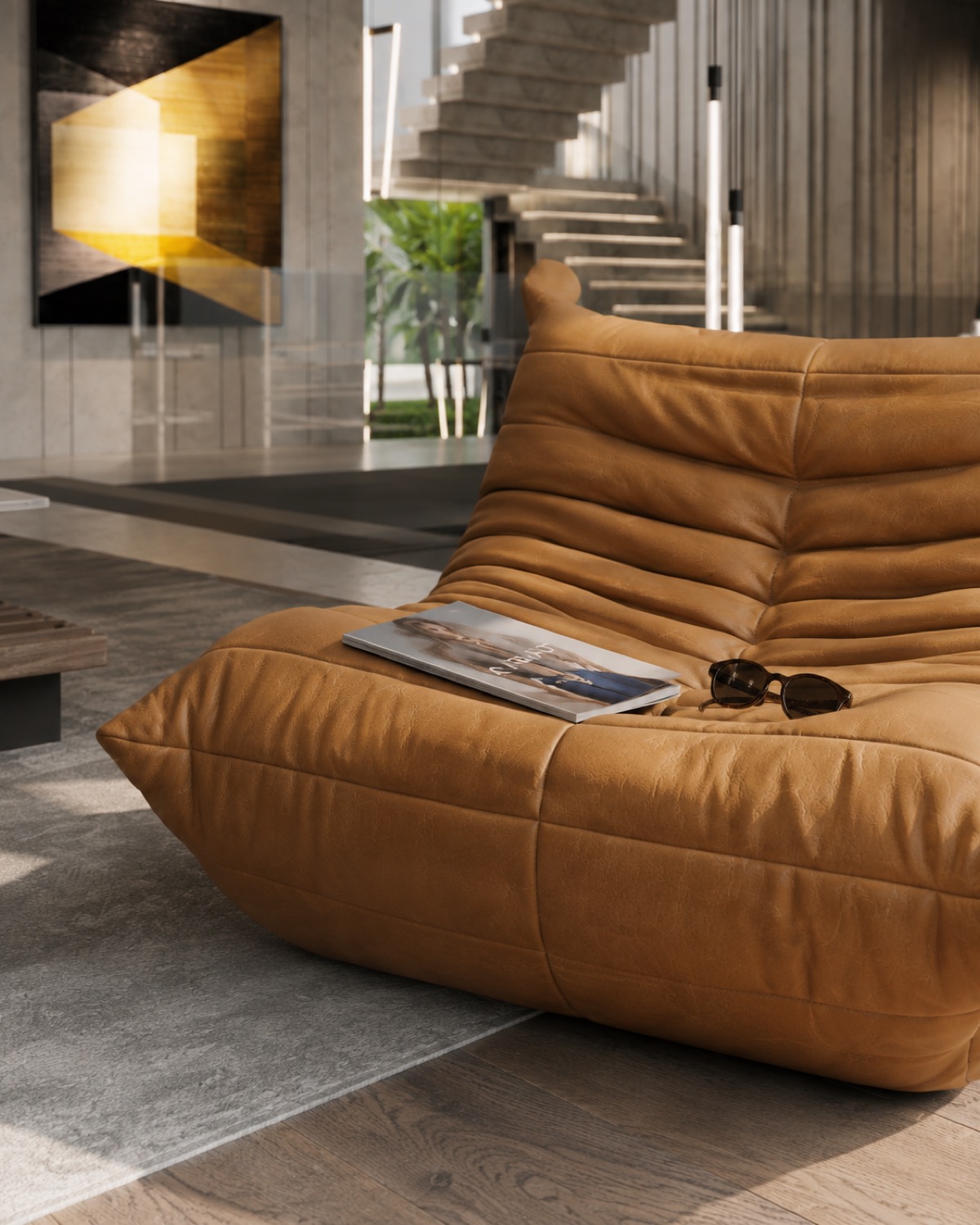
Rather than directly reproducing Togo’s distinctive 1970s aesthetic, the interpretation at CT Villa presents a more restrained, controlled, and contemporary design language. In place of pronounced quilting and strong retro details, simple textures, balanced colours, and contemporary material choices come to the forefront.
Nevertheless, the central idea remains unchanged: not merely to provide a place to sit, but to invite the user to relax and experience a freer way of living within the space.
The low seating arrangement also helps preserve visual continuity throughout the interior. The horizontal presence of the furniture becomes a complementary part of the architecture without obstructing the surfaces, views, or natural light. As a result, a balanced relationship is established between furniture and architecture — one in which they support rather than compete with one another.
The Transformative Power of Timeless Design
For a design to be timeless does not mean that it must be repeated without change. True timelessness lies in the ability of the idea behind a design to adapt to different periods, lifestyles, and spaces.
This is also why Togo has remained relevant for more than fifty years. Design principles such as low-level comfort, modular use, body-enveloping forms, and flexible placement within a space continue to live on through different furniture pieces and contemporary interior approaches.
The contemporary interpretation at CT Villa demonstrates how the idea behind an iconic design can be translated into a new architectural language without directly reproducing its original form. The design philosophy of the past is reinterpreted through contemporary materials, simplified forms, and the needs of modern life, becoming an integral part of the character of the space.
Timeless design learns from the past without remaining in it; rather than copying a form, it reinterprets the idea behind it.